

Revisiting the Bauhaus principles through the lens of contemporary sustainable materials and the growing demand for minimalist living spaces. What does 'form follows function' mean when the function itself has changed?
Contents
The Bauhaus Premise
When Walter Gropius founded the Bauhaus school in Weimar in 1919, his ambition was radical: to dissolve the boundaries between fine art and applied craft. The school's motto — Kunst und Technik, eine neue Einheit ("Art and technology, a new unity") — captured an era's belief that beauty and utility need not be opposed.
The most enduring legacy of this philosophy is the design shorthand "form follows function," attributed to American architect Louis Sullivan decades earlier but fully embodied by Bauhaus pedagogy. The premise was elegant: objects should express their purpose honestly, without ornament applied as afterthought.
A Century Later
In 2024, we live surrounded by objects designed under this doctrine, yet the premise has quietly shifted. The objects we design for have changed — screens don't need load-bearing walls; notifications don't require structural support.
The "function" in modern product design is increasingly psychological rather than mechanical. A chair must support a body; a smartphone must support a self. This distinction is not trivial. When the function is emotional — to feel calm, focused, connected, or creative — then form becomes the function.
Sustainability as Constraint
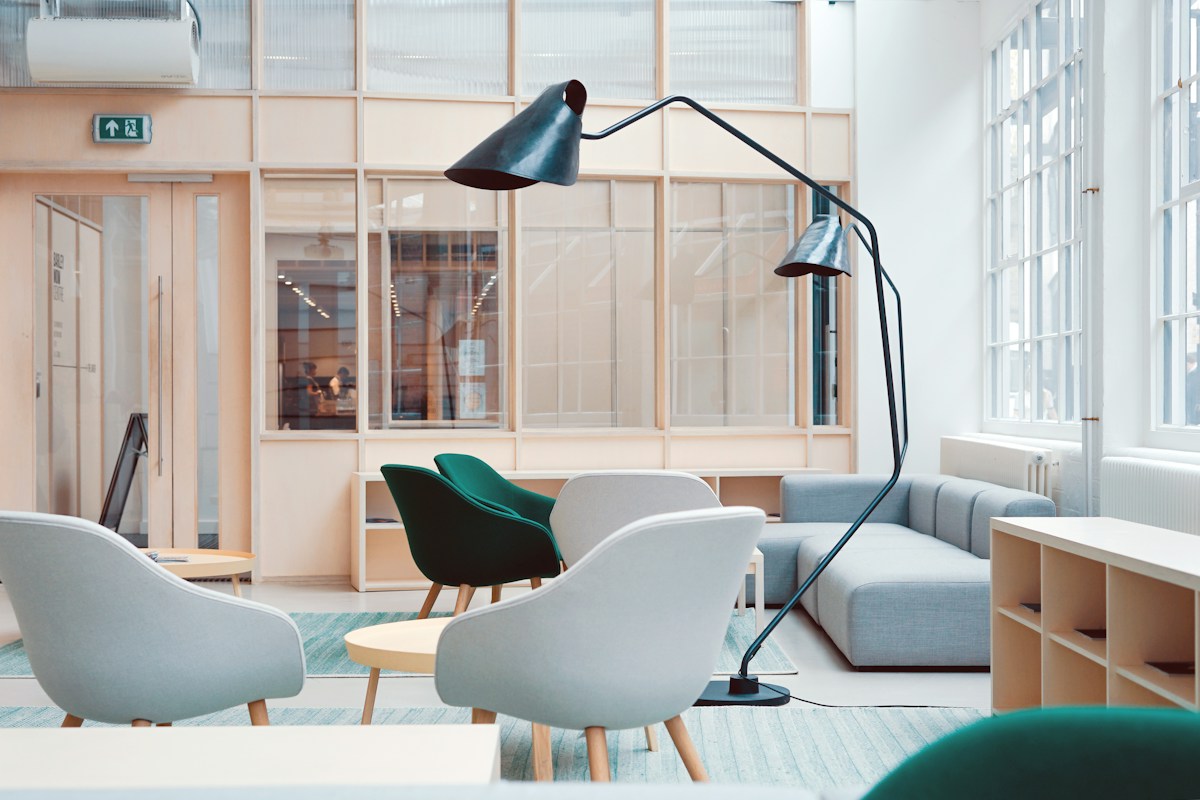
Contemporary minimalism has found an unlikely ally in the sustainability movement. When materials cost — environmentally and economically — the impulse toward ornamentation becomes harder to justify. Natural materials like solid wood, linen, and unglazed ceramic bring their own inherent beauty that doesn't require concealment or embellishment.
The Scandinavian design tradition anticipated this convergence. Danish and Finnish designers of the mid-20th century produced objects whose simplicity was inseparable from their respect for craft and material truth. A Hans Wegner chair doesn't apologize for its joints — the joinery is the design.
What Endures
The Bauhaus principle survives not as a rigid formula but as an ethical orientation: understand the purpose deeply before designing the form. In an age of generative AI and rapid prototyping, this demands more discipline, not less. The ease of generating variations does not resolve the harder question of what we're actually trying to achieve.
Good design, in any era, is the art of disciplined reduction.

